
You think you're short on orders. You're actually short on the ability to read the situation.
Most factories' first reaction is "why are orders down again," not "what actually changed."

"Translating your Chinese catalog into English" isn't going global — it's the first tuition fee countless factories pay
Translation just changes the language; the information structure buyers actually care about hasn't changed at all.
Stop saying "our factory can make anything" — that's exactly what scares US buyers
To a Chinese factory it signals capability; to a buyer's ears, it signals "uncontrollable risk."
When you say "great value," what the buyer hears is "no brand pricing power"
Competing on price alone means giving up negotiating leverage and long-term customer relationships from the start.

When tariffs rise, everyone panics — but 90% of the panicking never actually ran their real margin numbers
Panic spreads faster than data. Do the math before you decide.

Everyone in your industry is racing to the bottom on price — before you join in, ask yourself: can you actually afford it?
The survivors of a price war are never the ones who cut deepest — they're the ones who did the math most clearly.

Factories that only quote FOB will never make a major US buyer's shortlist
FOB is just the starting point of cost — buyers need to see the full margin picture.

"Low price, high volume" — those four words are quietly eating five years of your cash flow
Chasing volume is often trading cash flow for scale, thinning your margin with every order.
Have you actually calculated what's left after every concession you make to a US buyer? Most people have no idea.
Payment terms, return rates, currency swings — each one quietly eats into your margin.
Leave these three lines off your quote sheet, and the buyer blacklists you on the spot
Unclear payment terms, MOQ tiers, or cost assumptions can single-handedly end the conversation.
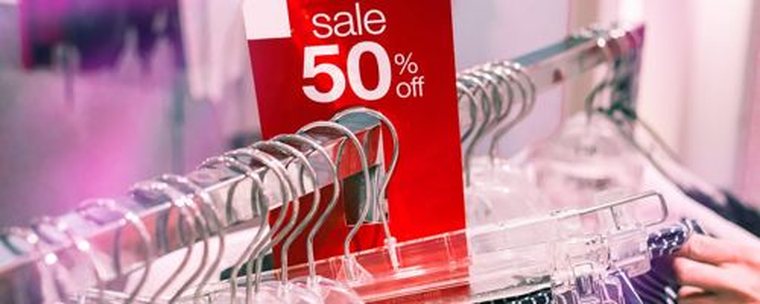
Why does the buyer go quiet right after you offer a discount?
Sometimes a price cut signals "maybe something was wrong with this product to begin with."

Stop fixating on unit price — pick the wrong channel, and your margin ceiling is set before you even start
Your channel choice determines the ceiling on your profit, full stop.

Designing packaging and building a brand before locking in your channel is the most expensive mistake Chinese factories make going global
Without a defined channel, every branding and packaging decision is just a guess.
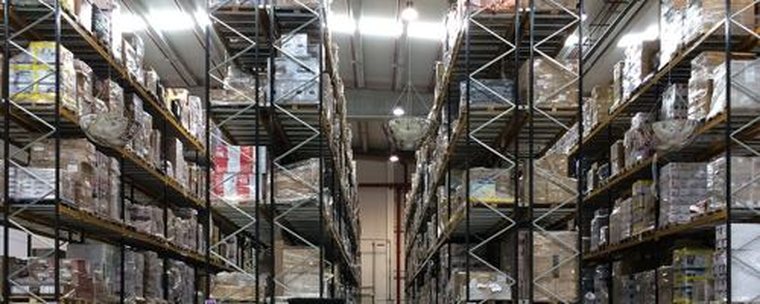
Costco and a boutique store want completely different products — do you actually know the difference?
Different channels run on entirely different buyer logic and pricing logic.

No matter how polished your independent site looks, buyers won't come looking for you
An independent site is a storefront, not a customer acquisition engine.
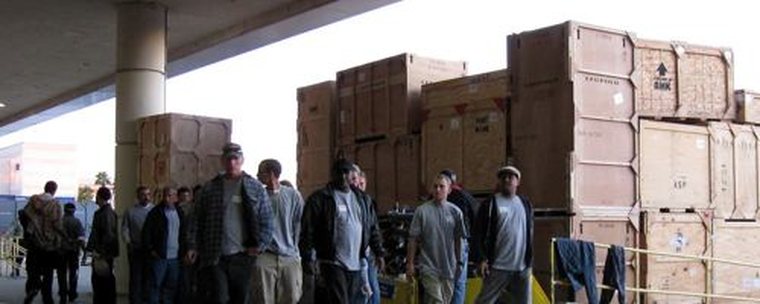
You rented the booth, but had zero channel strategy — that money is probably gone
Without a clear target channel, a trade show becomes "showing up" instead of "closing deals."
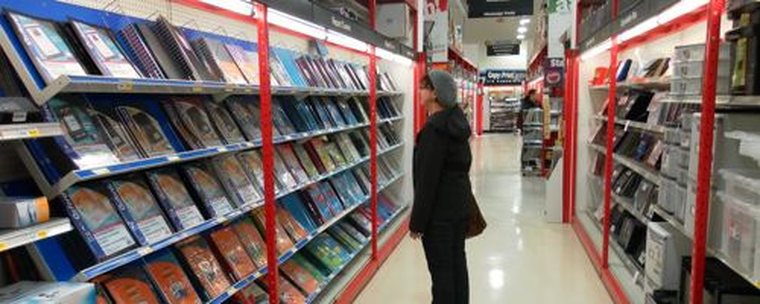
A product that sells out online doesn't mean it's ready for Walmart's shelves — these are two entirely different games
Online hits run on traffic algorithms; big-box retail runs on buyer trust.
Brand localization isn't swapping Chinese for English — that's the biggest misconception out there
Localization means your brand, packaging, and communication genuinely fit the US market's context.
Your packaging pops on a Chinese shelf — on a US shelf, it reads as "foreign"
Color logic, information density, and visual habits differ completely between the two markets.
Picking an English brand name that's easy to say and remember is ten times harder than you think — and ten times more important
A name buyers can't pronounce and consumers can't remember starts you off already behind.

The visual mistake Chinese factories make most often: the more you cram in, the less the buyer actually sees
Trying to squeeze every selling point onto one image means the buyer remembers none of them.

Moving from OEM to your own brand isn't as simple as changing a logo — it's a complete mental rebuild
Changing a logo takes five minutes. Changing how you think takes far longer.

The grander your brand story sounds, the less US consumers actually believe it
US consumers trust specific, real, verifiable details more than grand narratives.

US buyers won't spend their time translating your Chinese catalog — you probably only half-believe that
Buyers have dozens of suppliers competing for attention; materials they can't understand get skipped.

Materials that let a buyer instantly get it, versus a self-congratulatory company intro — the gap isn't design, it's logic
Most materials talk about "how great we are" instead of what the buyer actually cares about.

When a buyer asks "what makes your product different," most factories can't answer
Not being able to articulate differentiation tells the buyer "I'm replaceable at any time."

Weak English isn't the real reason you got stood up — unclear logic is
The real problem is usually that the content itself wasn't convincing.

One follow-up email reveals whether you actually understand a US buyer's rhythm
Follow up too fast and you look impatient; too slow and you look indifferent.
A trade show isn't the finish line — it's the starting line. Unfortunately, 90% of factories go cold right after
Big money spent exhibiting, then no follow-up system after the show ends.
You spent a small fortune exhibiting and walked away with a handful of WhatsApp contacts who never reply — where did it go wrong?
Unclear targets, weak follow-up, unready materials — missing any one of these wastes the whole effort.

Bigger booth, more face? That's not how buyers actually judge you
What buyers care about is whether you can solve their problem.

Walking into a trade show with no target buyer list is walking in with nothing
Without buyers locked in ahead of time, you're stuck passively waiting for people to approach your booth.

The first thirty seconds at your booth decide whether the buyer remembers you at all
A buyer walks dozens of booths a day — your opening has to hit their pain point precisely.

New brand, new packaging, trade shows attended — and the project is still stuck. The problem usually isn't execution, it's sequencing
Every piece can be done well individually, but the wrong order and pacing will stall the whole thing anyway.

The most common trap for second-generation successors: judging today's US market using their parents' old playbook
The previous generation's winning formula has often already stopped working in today's channel landscape.
You hired a design agency for packaging, and got something "good-looking but useless"
Design agencies understand aesthetics, but not necessarily what a US buyer is actually looking at.

A global-expansion project with no one clearly in charge of it will almost certainly go nowhere
Going global isn't a side project you push forward whenever you happen to remember it.

Your China team and US team each doing their own thing is the hidden reason many global-expansion projects fail
A disconnect between the two ends is a silent killer for cross-border projects.

When orders got cut in half, did you start doubting whether you're even cut out for this trade?
Nearly every veteran trader has been through that doubt. The problem isn't you.
"Pretending to understand" is more dangerous than "not understanding" — I've seen too many owners fall into this trap
Not knowing isn't scary. Being afraid to admit you don't know is.

It's not that you can't learn this — it's that you've never had someone around you willing to tell you the truth
What most owners lack isn't effort — it's someone willing to just say it straight.

The more experienced the trader, the more likely they are to judge today's market by yesterday's playbook
Experience easily hardens into habit, and habit is a liability in a fast-changing market.

Sunk cost is quietly hijacking every decision you make
Money and time already spent make it hard to walk away, even when you should.

Going global was never something one person could carry alone — you need someone who genuinely gets it to work through it with you
A sense of direction isn't something you grind out through sheer willpower alone.
The moment tariffs shift, the whole industry starts panic-selling. That's actually the most dangerous moment of all
Decisions made in a panic are rarely the ones that hold up under scrutiny.
"Can I still get into the US market right now" is the wrong question — what you should be asking is "how should I approach it"
A yes-or-no question only produces anxiety, never a real judgment call.

Policy changed — and so did the buyer's decision-making logic. Are you keeping up?
Tariffs affect more than cost; they're also reshaping buyers' sourcing strategy.
Everyone's talking about tariffs, but no one's telling you the real fix is your pricing structure
Doomscrolling the news won't help — what you actually need to do is rebuild your pricing from scratch.

The "US market" was never one single thing — understand how the channels have diverged, and you understand where the real opportunity is
"The US market" is too broad a term — you have to break it apart to actually see it.

Every industry reshuffle is a moment when a few people change tables — while most people just keep spinning in place
Downturns rarely eliminate the people with bad products — they eliminate the people who couldn't read the situation.

A brand alone can't save you — a brand is the outcome, not the starting point
Many people treat "build a brand" as a last resort, but a brand was never the cause — it's the result.